Woven and welded gabions
Woven and Welded Gabions: Uses, Specifications, and Supply & Installation Options
Overview
In implementation, they are flexible with soil movement and allow natural water drainage, making them a practical choice for projects such as roads, torrents, valleys, government and private facilities, and industrial and agricultural sites.
The Most Important Things to Know Before Purchasing or Executing
The ultimate success of a gabion system relies on three core pillars: mesh quality and anti-corrosion treatment, stone quality and placement technique, and installation, binding, and bracing methods. Any flaw in one of these can lead to face bulging, joint separation, or long-term structural failure.
The Difference Between Woven Mesh Gabions and Welded Gabions at a Glance
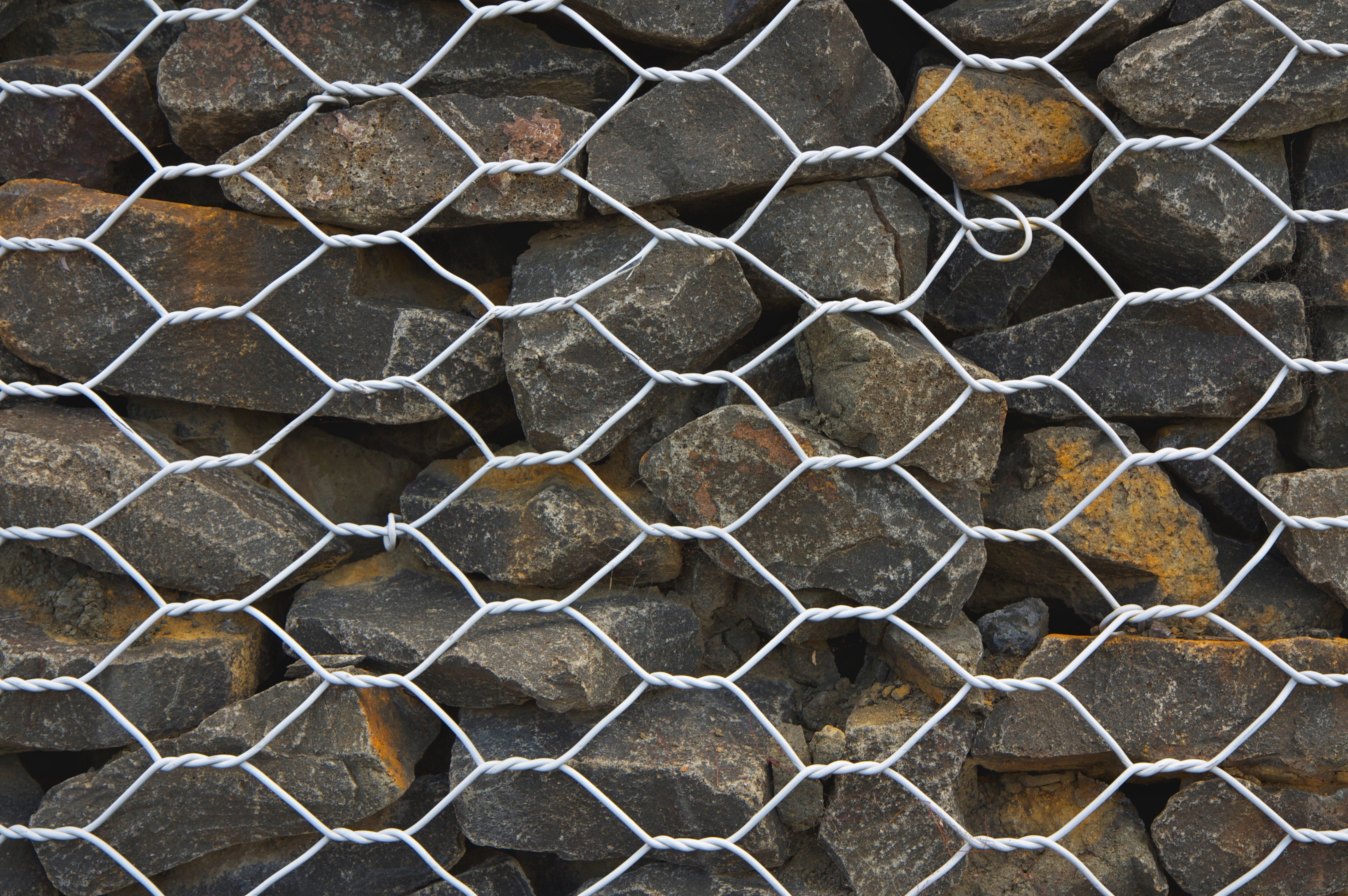
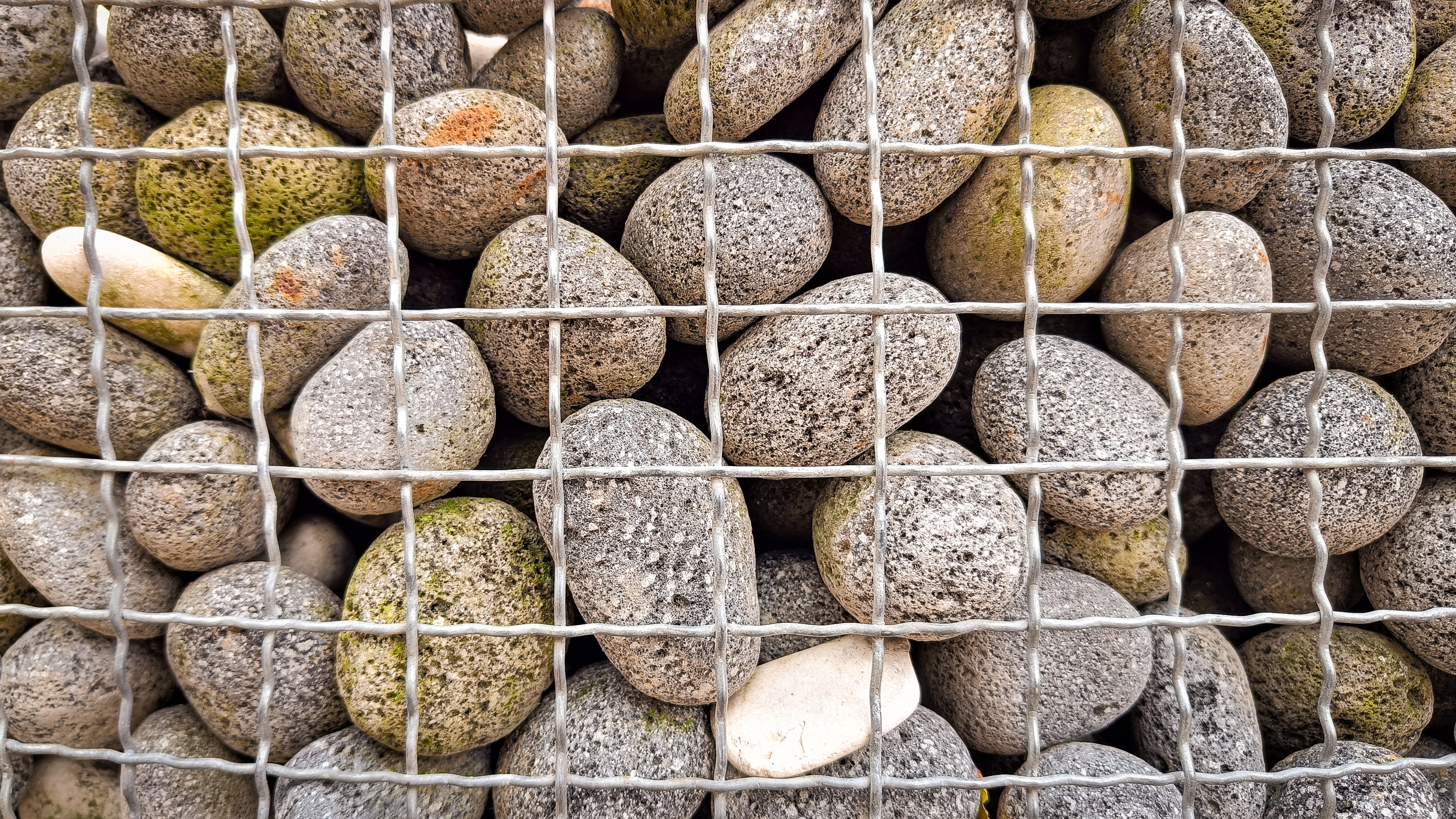
Woven gabions are manufactured from double-twisted hexagonal steel wire mesh, making them exceptionally flexible and resistant to localized deformation. Welded gabions are constructed from square mesh welded at the intersections, offering a more regular, straight-lined geometric aesthetic and higher rigidity for the mesh panel itself, though they are less flexible than woven gabions if not properly braced and tied.
When to Choose Woven Gabions
Choose woven mesh when projects are situated on slopes or unstable soils, for torrent and channel protection, or in locations anticipating differential settlement. The inherent flexibility provides a higher margin of safety against cracking or detachment.
When to Choose Welded Gabions
Choose welded gabions when final aesthetic appearance is paramount, sharp corners and straight lines are desired, or for exterior landscaping, architectural barriers, and short-to-medium retaining walls in relatively stable locations, provided they are paired with proper internal bracing and robust tying.
Key Practical Applications of Gabions
- Retaining walls for roads and embankments, especially during road widening or slope failure remediation.
- Protecting wadi slopes, culvert outlets, and flood discharge structures from erosion and scour.
- Lining open drainage channels and protecting channel beds under high-water velocities.
- Protecting bridge and culvert foundations and dissipating water energy at spillways.
- Low-height gabion mattresses (reno mattresses) for bed and bank protection.
- Reinforced earth barriers, agricultural land subdivision, and soil erosion control in farms and terraced landscapes.
- Landscape architecture and garden projects, creating outdoor seating, planter boxes, and decorative natural-stone-faced walls.
- Security barriers or operational zone segregation in industrial sites when integrated with fencing systems.
Why Many Owners and Authorities Prefer Gabions
- Natural Water Drainage: Water filters freely through the stone voids, significantly reducing hydrostatic pressure behind the wall compared to solid concrete structures.
- Flexibility: Accommodates minor ground settlements without suffering visible cracks.
- Rapid Execution: Relatively fast to install, typically eliminating the need for complex concrete formwork.
- Visual Integration: Blends seamlessly into natural environments, especially when sourcing stone locally from the project area.
- Partial Maintenance: Allows localized repairs, such as replacing a binding wire or a single stone in a specific area.
Detailed Gabion System Components
To accurately understand specifications and orders, it is vital to know the core components, as a supplier might offer excellent mesh but compromise the system with inferior accessories or unsuitable stones.
- Gabion Mesh: The primary structural element, either hexagonal woven or square welded.
- Selvedge / Edge Wire: Heavier-gauge wire running along the edges of panels to maintain structural shape and resist bulging.
- Lacing Wire: Used to assemble panels, connect adjacent baskets, and secure lids after filling.
- Fasteners / C-Rings: Mechanical rings sometimes used as a faster alternative to manual lacing wire, depending on the approved system.
- Internal Diaphragms: Internal partitions inside the basket that restrict stone movement and limit bulging, particularly important in longer units.
- Geotextile Non-Woven Fabric: Placed behind walls or beneath mattresses to prevent soil migration through stone voids while permitting water flow.
- Fill Stone: The infill material that largely dictates final appearance and performance.
Technical Specifications: Woven Mesh Gabions
Woven mesh typically features a double-twisted hexagonal pattern, which prevents the mesh from unraveling if a single wire breaks. When ordering this type, review the following points:
- Mesh Opening Size: Most commonly $8 \times 10\text{ cm}$ or $10 \times 12\text{ cm}$, varying by design, water velocity, and stone size.
- Wire Diameter: Dictates structural resistance, typically ranging between $2.7\text{ mm}$ and $3.9\text{ mm}$ with a heavier selvedge wire.
- Corrosion Protection: Heavy zinc galvanizing, enhanced alloys like Galfan (Zinc-Aluminum), or an additional PVC coating for severe environments.
- Tensile Strength: Drawing and manufacturing quality directly impacts wire longevity and load-bearing capacity.
- Twist Uniformity: Manufacturing twists must be uniform to ensure cells do not open under load.
Technical Specifications: Welded Gabions
Welded gabions rely on straight wires welded at intersections, delivering a straighter, cleaner face. When ordering, note the following:
- Mesh Opening Size: Commonly $5 \times 5\text{ cm}$ or $5 \times 10\text{ cm}$, selected based on fill stone size to prevent loss of smaller pieces.
- Wire Diameter: Designed to meet indentation and loading resistance requirements.
- Welding Quality: Critical factor; weld points must be robust and resistant to fracture during bending or tying.
- Coating Layer: Galvanized after welding or before welding depending on system standards, with specific treatments often mandated for weld protection.
- Internal Bracing: Welded units require internal tie-rods or stiffeners to maintain straightness during filling.
Corrosion and Rust Protection Options
Choosing the right protective coating directly dictates project lifespan. A dry desert environment differs significantly from marine-adjacent sites, permanent waterways, or high-salinity soils.
- Heavy Zinc Galvanization: An economical and practical choice for most standard locations, provided coating thickness meets required specifications.
- Galfan (Zinc-Aluminum): Offers superior corrosion resistance across diverse environments, deployed in projects requiring extended lifespans.
- PVC Coating Over Galvanization: Ideal for harsh environments such as marine proximity, brackish water, aggressive soils, or projects requiring extra impact and scratch protection.
Gabion Box and Mattress Dimensions
Dimensions depend on engineering designs, though standard stock sizes simplify procurement and execution. Custom sizes are also available upon request.
- Retaining Wall Gabion Baskets: Standard lengths include $2\text{ m}$ or $3\text{ m}$; heights of $0.5\text{ m}$ or $1\text{ m}$; depths of $0.5\text{ m}$ or $1\text{ m}$.
- Gabion Mattresses: Low heights such as $0.17\text{ m}$, $0.23\text{ m}$, or $0.30\text{ m}$, utilized for channel beds and bank protection.
- Custom Fabrication: Non-standard dimensions, shallow welded facings for decorative purposes, or heavy-duty protection units designed with internal compartmentalization.
Fill Stone Specifications: Dictating Wall Quality
Even with flawless mesh, an unsuitable stone can ruin structural aesthetics and performance. Key stone criteria include:
- Size: Must be larger than the mesh opening to prevent loss, typically recommended as medium-to-large stone with proper gradation.
- Hardness and Durability: Dense, fracture-resistant stone is preferred, as crumbling reduces voids and alters long-term drainage performance.
- Shape: Angular, fractured stone improves interlocking friction, whereas rounded stone increases void ratios and demands tighter manual placement.
- Cleanliness: Soil or clay contamination on stones reduces friction, harms drainage, and compromises visual finish.
- Color and Appearance: Vital for architectural projects and visible facades, where color-matched stone yields uniform visual results.
Geotextile Filter Fabric: Why It Is Essential
In retaining walls or wadi protection, geotextile fabric is positioned behind or beneath gabions to prevent fine soil particles from washing through the voids. Without it, sub-grade soil loss behind the wall can cause cavities and localized subsidence. The fabric must allow water permeability while blocking soil migration according to site soil gradation.
Core Installation Steps in Proper Sequence
Installation transforms raw materials into a cohesive system. Below are standard field practices alongside notes to prevent common errors:
- Site Preparation: Leveling the base to design elevations, removing weak soils, treating settlement areas, and setting temporary drainage slopes during execution.
- Foundation Layer: Can consist of a compacted aggregate layer or lean concrete depending on design, ensuring a uniform base that prevents localized sinking.
- Geotextile Placement: Laying fabric with adequate roll overlaps and temporary anchoring to prevent shifting during gabion placement.
- Assembly: Unpacking bundles, unfolding panels, shaping boxes, installing internal diaphragms, and lacing edges with wire or fasteners.
- Positioning & Aligning: Placing boxes to correct lines and levels, then tying adjacent baskets together to act as a monolithic mass.
- Layered Filling: Depositing stone in graduated layers with manual face placement to ensure a neat finish and minimize large voids.
- Internal Bracing: Installing internal ties or bracing at designated levels—especially in taller structures—to prevent front-face bulging.
- Lid Closure: Once filled to grade, closing the lid and lacing securely across all edges and diaphragms under proper tension.
- Backfilling: For retaining walls, backfilling behind the structure in layers with proper compaction while preserving drainage paths and protecting the fabric.
- Finishing & Handover: Site cleanup, correcting minor alignments, and inspecting bindings and facades.
Critical Design and Operational Considerations for Gabion Retaining Walls
- Wall Batter (Slope): Many walls are constructed with a slight inward tilt to enhance stability per engineering specs.
- Stepping / Benches: For high elevations, walls are built in stepped tiers to improve stability and reduce structural pressure.
- Back Drainage: Although gabions are permeable, chronic water accumulation behind a wall can transport fine soil particles; a dedicated back-drainage system or gravel layer paired with geotextile is advised.
- Toe Protection: In flood channels, securing the base against scouring is mandatory, often achieved using apron gabion mattresses in front of the toe.
- Compaction Control: Unbalanced compaction or heavy machinery operating directly adjacent to unbonded walls can displace baskets before structural cohesion is achieved.
Gabions in Flood and Wadi Applications
Gabions are widely deployed in wadi protection due to their flexibility and energy-dissipating capacity. Critical success factors include selecting relatively heavy stone, securing perimeters, interconnecting units securely, and anchoring edges against lateral flow scour.
- Common Wadi Applications:
- Protecting channel shoulders and bends prone to erosion.
- Lining channel beds with gabion mattresses to prevent bed scouring.
- Reinforcing culvert outlets and drop structures to prevent deep scouring holes.
- Constructing low energy-dissipating check dams to slow velocities in designated sections.
Gabions in Architectural Landscaping and Facades
In residential and commercial developments, gabions are requested for their natural aesthetic and rapid execution compared to traditional stonework. Welded gabions shine here by providing clean lines and orderly faces, though woven units can also achieve exceptional results with meticulous manual face packing.
- Architectural Use Ideas:
- Boundary walls for farms and retreats, optionally topped with wire fencing.
- Robust stone-faced column bases for gates or fencing pillars.
- Outdoor seating, benches, and planter box surrounds.
- Decorative design features around building entryways or public parks.
Supply Options from Alam Al-Siyaj Contracting
As a specialized manufacturer, supplier, and contractor handling fencing, shades, barriers, and gabions, Alam Al-Siyaj Contracting can tailor gabion supply to exact project requirements—ranging from material supply only to turnkey execution:
- Gabion Mesh Supply Only: Supplying boxes or mattresses with lacing wire and accessories, in standard or custom dimensions with required protective coatings.
- Mesh & Stone Supply: Offered when clients require a comprehensive package or when local site stone is unsuitable.
- Supply and Installation (Turnkey): Covering site preparation, assembly, filling, closing, backfilling, and finishing per contract scope.
- Multi-Item Project Supply: Consolidating packages that combine slope-protection gabions, security fencing, temporary Heras panels, and barriers to eliminate trade coordination conflicts.
Accurately Determining Required Quantities
Calculating quantities depends on gabion volume in cubic meters, unit counts, and stone sizing. To avoid shortages or excessive overages:
- Calculate Structure Volume: Length multiplied by height multiplied by depth, accounting for any stepping or batters.
- Convert to Units: Divide total volume by desired basket dimensions (e.g., a $2\text{m} \times 1\text{m} \times 1\text{m}$ box equals $2\text{ m}^3$).
- Stone Estimation: Stone volume equals gabion volume plus a minor waste percentage based on packing density, void ratios, and stone morphology.
- Accessories: Account for lacing wires, internal ties, geotextile fabric, and supplementary hardware.
Factors Influencing Pricing
Gabion pricing is dynamic, driven by specifications, environmental exposure, and scope of work:
- Mesh Type: Woven versus welded, and opening dimensions.
- Wire Diameter: Main wire gauge and selvedge gauge.
- Coating Type: Galvanized, Galfan, or PVC-coated.
- Unit Dimensions: Larger units demand heavier bracing and handling.
- Stone Source: Proximity of quarries, stone grade, and transport/sorting costs.
- Site Conditions: Accessibility, distance from supply hubs, and permitting rules.
- Scope: Material-only versus complete installation including earthworks, backfilling, and geotextiles.
Practical Comparison: Gabion vs. Concrete Retaining Walls
- Drainage: Gabions excel through natural permeability; concrete requires weep holes and engineered back-drainage.
- Flexibility: Gabions tolerate minor settlements; concrete is rigid and prone to cracking under shifting loads.
- Aesthetics: Gabions offer a natural look; concrete often requires architectural cladding or surface treatments.
- Execution: Gabions are generally faster in open sites; concrete demands formwork, rebar work, and curing time.
- Space Requirements: Concrete can achieve thinner profiles in certain cases, whereas gabions require adequate base depth for gravity stability, especially at height.
Quality Control and Inspection Checklist Upon Delivery
- Dimensional Compliance: Verify length, width, height, and count of internal diaphragms.
- Coating Inspection: Check galvanization or PVC coat uniformity for peeling or bare patches.
- Selvedge Check: Ensure heavy perimeter wires are present on all edges per system design.
- Welds (Welded Gabions): Confirm points are solid and do not fracture under light manual bending.
- Accessories: Confirm lacing wire or C-rings match system quantity and corrosion grade.
- Stone Check: Inspect size, cleanliness, and fracture resistance.
- Execution Inspection: Verify inter-basket tying, internal braces, and face packing quality.
Common Errors to Avoid
- Using stones smaller than the mesh opening, causing stone loss and face deformation.
- Random filling without face packing, resulting in misaligned faces, massive voids, and bulging.
- Omitting internal ties, especially in high walls or welded mesh, causing front-face blowout.
- Failing to tie adjacent baskets together, forcing each basket to act independently and reducing global stability.
- Neglecting geotextile fabric in fine-grained soils, leading to long-term post-construction settlement behind the wall.
- Leaving foundation bases unprotected against scour in flood channels, resulting in loss of sub-base support.
- Heavy compaction directly against the wall face before structural stabilization and lid closure, pushing baskets out of plumb.
Additional Details: Connection and Binding Systems
- Lacing Wire: Traditional, flexible, and versatile; requires trained labor to maintain uniform tension.
- Fastener Rings (C-Rings): Deployed with pneumatic tools for speed and consistency, requiring specialized hardware and clips.
- Spiral/Helical Binders: Used in select welded systems for rapid edge joining, provided they are properly locked in place.
Choosing Between Baskets and Mattresses
- Baskets (Gabion Boxes): Selected when height and gravity mass are required to resist sliding and overturning.
- Mattresses (Reno Mattresses): Selected when the primary challenge is surface erosion of banks or channel beds requiring a low-profile flexible armor layer.
Considerations for Government and Security Projects
In sensitive governmental or secure infrastructure projects, integrating security fencing or perimeter barriers with gabions is common. This requires pre-planning foundation integration, positioning post anchor points, and avoiding puncturing geotextiles or weakening gabion integrity. Solutions include casting base plates or mounting sleeves directly into a gabion foundation or constructing the gabion gravity block first and anchoring separate fence posts behind it per engineering specifications.
Site Scheduling and Execution
Timing supply and installation impacts quality, particularly for wadi projects ahead of the rainy season. Best practices include early mesh delivery, establishing dry storage areas, staging stone deliveries to avoid site congestion, and scheduling skilled tie-and-pack labor. Heavy machinery like loaders or excavators is typically required for stone loading, paired with manual labor for face placement.
Sustainability and Environmental Impact
Gabions present a lower visual and environmental footprint in many settings because they utilize natural rock infill and allow vegetation to root through voids over time. They minimize concrete consumption in structural applications and enable local stone sourcing to cut transportation emissions. Sourcing must comply with regulated quarries, avoiding unpermitted wadi bed excavation that disrupts downstream flood paths.
Post-Execution Maintenance and Monitoring
Gabion structures require minimal maintenance when executed correctly, but periodic checks provide early indicators of issues:
- Inspect faces after the first heavy rainy season to ensure no scouring has occurred at toes or flanks.
- Check exposed ties and re-tension or replace damaged connections.
- Clear accumulated debris that alters channel flow pathways.
- Address any back-wall settlement by repairing backfill grading and checking drainage pathways.
Frequently Asked Questions Before Requesting a Quote
- Can gabions be supplied without stone? Yes, mesh and accessories can be supplied standalone, allowing clients to source local stone matching size and durability requirements.
- Are gabions suitable for coastal zones? Yes, provided higher-grade corrosion protection is specified—such as Galfan alloy or PVC-coated mesh—alongside suitable durable stone.
- Can tall gabion walls be built? Yes, but they require structural engineering accounting for batter, depth, and tiering, often requiring multiple tiers, wider bases, toe protection, and drainage.
- Which is better for a neat face, woven or welded? Welded typically provides higher regularity, though woven can achieve stellar appearances with meticulous face packing, proper stone selection, and correct bracing.
- What info accelerates a project quotation? Wall length, height, and depth (or protection area), site location, environmental profile, mesh type, coating type, geotextile inclusion, supply-only versus installation scope, and whether local stone is available on-site.
Practical Decision Summary
If your objective is protecting a slope, wadi, or channel from scour, woven mesh gabions paired with appropriate stone and geotextile represent the safest and most flexible choice. If your goal is an architecturally refined geometric wall within a landscaping project, welded gabions offer cleaner lines, provided proper bracing, tying, and packing are strictly observed. In either case, quality is measured not by the mesh alone, but by the entire system—from selvedge wire and ties to infill stone and field execution.
For complete material supply or turnkey execution, Alam Al-Siyaj Contracting provides reliable woven and welded gabion options, customized specifications for your site environment, quantity estimation, and coordinated site installation services.